Program Description
Introduction
The demand for interdisciplinary education and training in the biomedical engineering field has expanded greatly in both academia and industry, primarily as a result in the availability of more complex technologies, medical devices, and future potential applications. Historically, Industry had difficulties incorporating students from different undergraduate engineering programs into their operations without going through rigorous and lengthy training programs. More employers are interested in graduates with sufficient depth in knowledge in an area to be successful at their jobs and sufficient breadth of knowledge and training to ensure cohesive operation of the company. Hence, Alfaisal University introduces a unique and multidisciplinary undergraduate program: Bachelor of Biomedical Engineering (BME).
Mission Statement
To offer a contemporary program in biomedical engineering allowing its graduates to make a substantial contribution to the welfare of Saudi society and the world at large through teaching, research and community service activities.
Program Educational Objectives and Outcomes
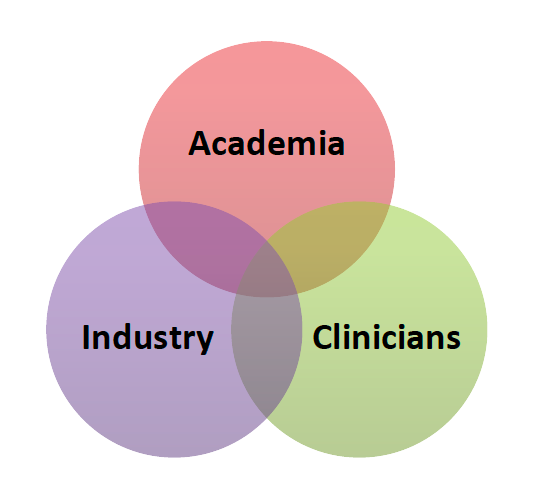
The goal of the Biomedical Engineering program is to integrate academia, clinical medicine, and the biomedical industry into the biomedical engineering education and research program. This provides structural support to the clinical rotations and senior design projects for the baccalaureate program.
Program Educational Objectives
The program educational objectives (PEOs) for the Biomedical Engineering program align with the missions of the university, college, and department. They are crucial for ensuring successful professional practice and enabling students to pursue advanced degrees. The Biomedical Engineering Department is aligned with the ABET (Accreditation Board for Engineering and Technology) requirements for developing the program's educational objectives (PEOs). These objectives were formulated by focusing on the core elements of the university's mission, including fostering creative knowledge, conducting impactful research, and providing professional community services.
The Bachelor of Biomedical Engineering program at Alfaisal University aims to produce graduates who will achieve the following program educational objectives:
- PEO1. Contribute to the biomedical industry and organizations by applying their knowledge in the design, implementation, and research of engineering systems and devices.
- PEO2. Pursue graduate studies to further their research, professional, or educational activities, thereby benefiting society.
- PEO3. Practice the engineering profession responsibly, with a deep understanding of the importance of professional, ethical, and societal responsibilities, to advance the community healthcare system.
Students Outcomes (SOs) (ABET 1-7)
- An ability to identify, formulate, and solve complex engineering problems by applying principles of engineering, science, and mathematics.
- An ability to apply engineering design to produce solutions that meet specified needs with consideration of public health, safety, and welfare, as well as global, cultural, social, environmental, and economic factors.
- An ability to communicate effectively with a range of audiences.
- An ability to recognize ethical and professional responsibilities in engineering situations and make informed judgments, which must consider the impact of engineering solutions in global, economic, environmental, and societal contexts.
- An ability to function effectively on a team whose members together provide leadership, create a collaborative and inclusive environment, establish goals, plan tasks, and meet objectives.
- An ability to develop and conduct appropriate experimentation, analyze, and interpret data, and use engineering judgment to draw conclusions.
- An ability to acquire and apply new knowledge as needed, using appropriate learning strategies.
Program Tracks
The program is named: Bachelor of Biomedical Engineering (BME). The students in this program will take a set of core courses from science, medicine, and engineering. Students will finish out their courses through a choice of one of the following specializations areas:
- Medical Imaging (MI)
- Medical Devices (MD)
- Artificial Intelligence
- Biomedical Artificial Intelligence (BAI)
- Artificial Intelligence in Healthcare
- Artificial Intelligence & Medicine
These specialty areas combined with core foundation courses will give students a solid foundational background in biomedical engineering with specific depth areas useful to industry, innovation, and postgraduate studies.
Program Structure and Curriculum
Admission Criteria
Alfaisal University seeks a highly motivated, academically well-prepared, and diverse student body. Admission to the University is competitive. Applying early is encouraged as the University has the right to limit enrollment due to space availability in major programs and overall student capacity. Please refer to the Admissions website for more information and detailed dates and deadlines. All prospective new students should apply for admission to Alfaisal University at http://admissions.alfaisal.edu/
This course offers an in-depth study of clinical measurements and medical instrumentation. The course covers biopotentials, biopotential electrodes, biosensors, and transducers, as well as key measurements such as ECG, ENG, EMG, ERG, and EEG. Students will learn about cardiovascular and respiratory system measurements, including blood pressure, blood flow, and pulmonary function analyzers. Additional topics include audiometry, biomedical virtual instrumentation, patient monitoring systems, and biomedical wireless telemetry. The course also explores clinical laboratory instruments like electrophoresis, ELISA, hematology, chromatography, spectroscopy, and blood gas analyzers, as well as therapeutic devices such as pacemakers, defibrillators, and ventilators. Emphasis is placed on the design, operation, safety, and calibration of these instruments.