
Jump to section
Introduction
The purpose of this document is to summarize the policies and procedures Alfaisal University follows to design, approve, and amend academic programs and courses. Planning introducing new programs must contribute to the achievement of the institution’s mission and goals and aligned with the National Qualification Framework (NQF). Curriculum development is governed by AU Guiding Principles and Core Values, which stem from respect for Islamic Principles as well as international best practices. The Undergraduate Curriculum Committee (UCC) is a standing committee of the University with the responsibility of reviewing and making recommendations regarding approval of new undergraduate programs, new undergraduate courses, amending existing academic programs, and changes to existing undergraduate courses. The Research and Graduate Council (RGC) is responsibility of reviewing and making recommendations regarding approval of new graduate programs, graduate courses, and amending graduate programs and courses.
1. Approval of Academic Programs and Courses
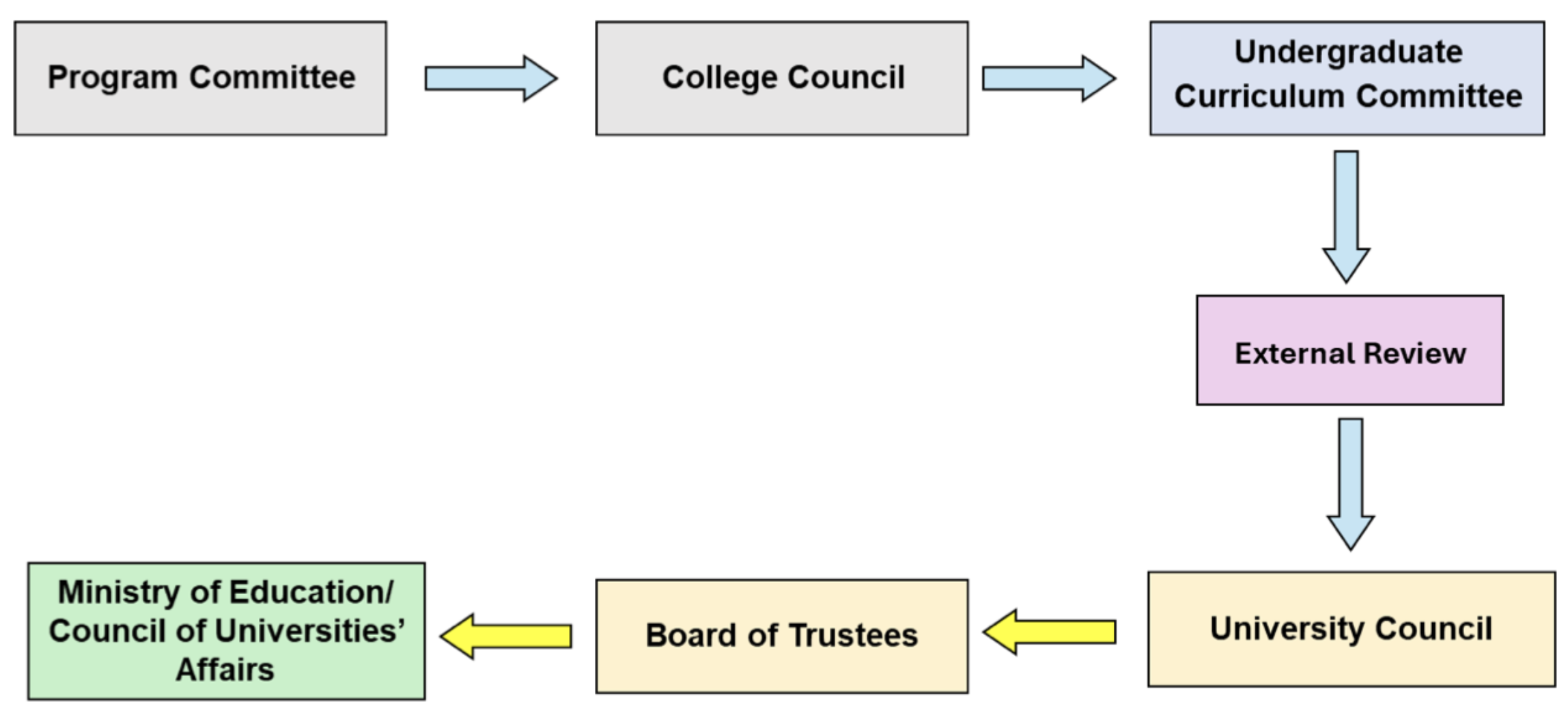
AU has a well-established formal approval process for its programs, including a systematic information flow and approval process. The development of university programs includes a thorough feasibility and local market study that considered AU constituents, stakeholders, and the overall AU context. The process and approval protocol for undergraduate programs is showing in Figure 1.
Figure 1: Undergraduate Academic Program Approval Protocol
Proposals for new bachelor programs must include the objectives of the new specializations, accompanied by a feasibility study that includes market needs and source of students, as well as the approval of an external reviewer. The program committee must review current faculty’s CVs to determine the availability of faculty to teach in the new program or course (or planned recruitment of new faculty). The proposal must indicate a director of the program, who must hold a PhD in the same program major and must be full-time. The program committee must also investigate and report the experiences of international, regional, and local universities, and consider the future requirements of applying local and international academic accreditation standards. The proposed program must be benchmarked against local and international programs and must include all the necessary supporting NCAAA documentation and Course Action Request Forms (APPENDIX 1). Once the documentation is complete, all proposals for new programs and courses must undergo a rigorous and thorough process of approvals at every level: the department, the college, and the university level.
Following approval from the UCC, the next step involves submitting the program curriculum/study plan for external review, followed by review and approval from the University Council. Finally, the proposal goes to the Board of Trustees and then the Ministry of Education/ Council of Universities’ Affairs for final approval. The timeline of new program development varies, but in general, the approval process can be completed within eight to ten months.
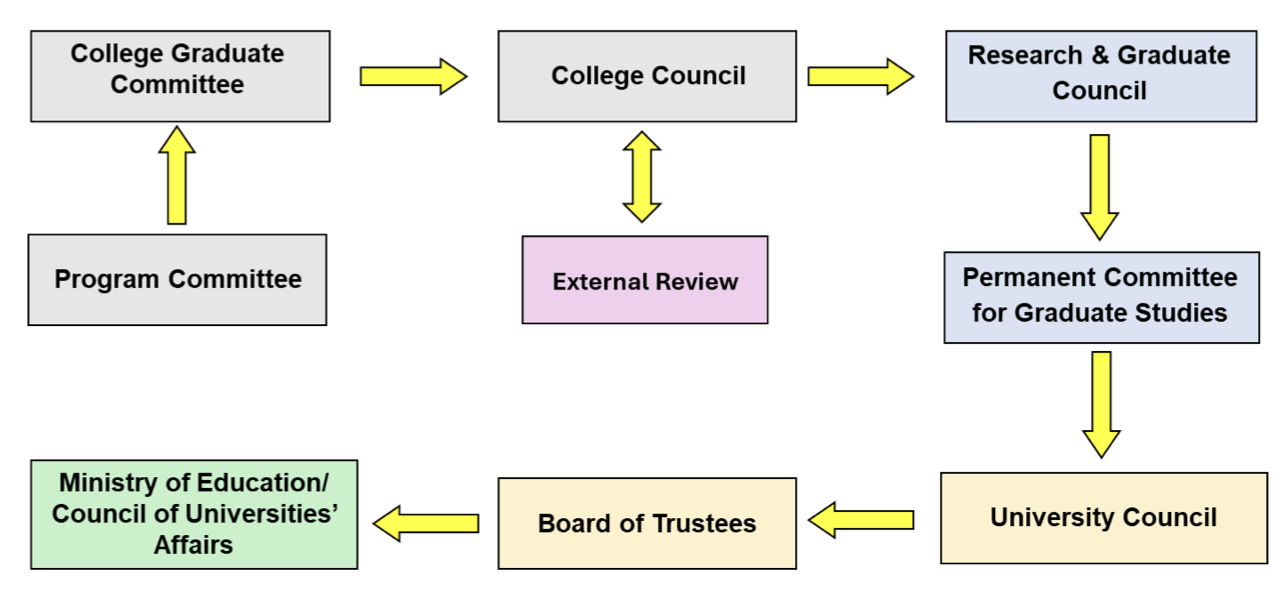
The process of introducing new graduate programs or graduate courses follow slightly different process from that of undergraduate programs. The approval process for graduate programs is showing in Figure 2. Proposed programs prepared by the program committee are first reviewed by the College Graduate Committee. The College Graduate Committee will send the proposal to the College Council for approval and for external review before it is sent to the Research and Graduate Council. Upon approval of the program by the Research and Graduate Council, it’s then sent for approval by Permanent Committee for Graduate Studies and University Council. Finally, the proposal is sent to the Board of Trustees and then the Ministry of Education/ Council of Universities’ Affairs for final approvals.
Figure 2: Graduate Programs Approval Process
Proposals for new graduate programs must also be accompanied by a feasibility study that includes market needs, external review, as well as an executive summary. Like undergraduate programs, proposed graduate programs must be benchmarked against local and international programs and provide supporting letter from an affiliated institution or agreement with a funding body if needed. These proposals must also include the CVs and contracts of the faculty teaching the courses, as well as the name of the program director of each program/track (full time at AU). The proposal must list the resources needed for the new program: the necessary research facilities, as well as the textbooks and databases available or requested. Finally, they must also include the accreditation certificate for the bachelor’s degree as well as NCAAA forms for program and course specifications.
2. Amendments to Existing Programs and Courses
All programs are monitored on regular basis to ensure continuing relevance and quality. For established programs, direct assessments and various types of indirect assessments including surveys and feedback are collected and analyzed for the purpose of improvement. The approval process for amending existing program or courses is showing in Figure 3.
Figure 3: Approval Process for Amending Existing Programs and Courses
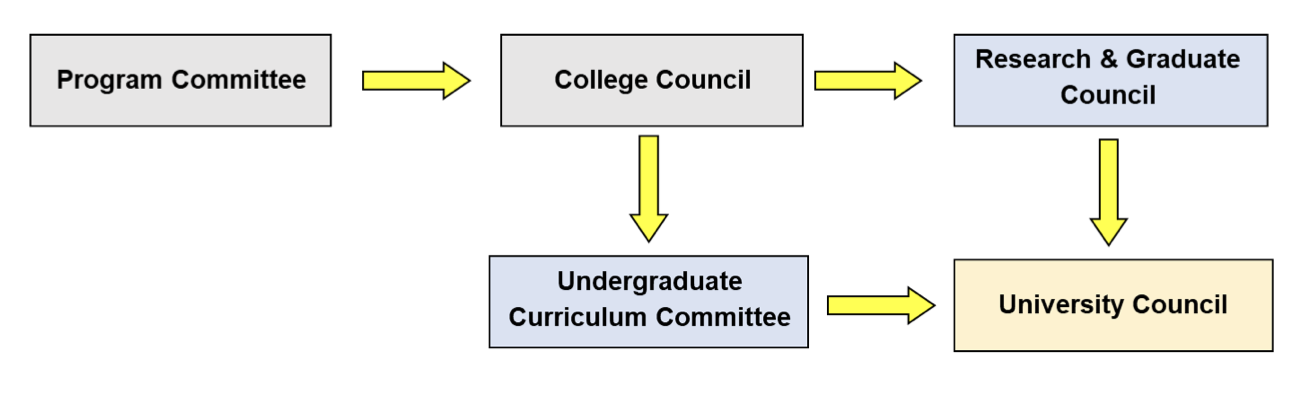
At the course level, faculty members can conduct analysis of the attainment of course learning outcomes and provide insight regarding appropriate course content and teaching techniques used and make recommendations for improvements on the course report. Similarly, recommendations for improvement at the program level are documented in the program annual report base on analysis of the attainment of the program learning outcomes using both direct and indirect assessments. The program director conducts internal deliberations within the department which normally includes the program/college QAA committee and the program advisory board to decide if the changes are major or minor, and these deliberations are systematically summarized. The decision must then be sent to the college for further deliberations in the College Council. The College Council is guided in its deliberations by the department and college mission, as well as by the needs of current and prospective students and the job market. Any substantive changes to a program must go through the College Council, the UCC or RGC, and the University Council. A substantive change is one that significantly affects the learning outcomes, structure, organization, or delivery of the program.
Moreover, adding new courses to existing programs, modifying course numbers and names, changing courses prerequisite and corequisite requirements must follow the approval process for amending existing programs and courses in Figure 3. To initiate the process, college must submit the rational for the changes, the approved minutes from the program committee and College Council along with all the required forms including courses specifications and Course Action Request Form.